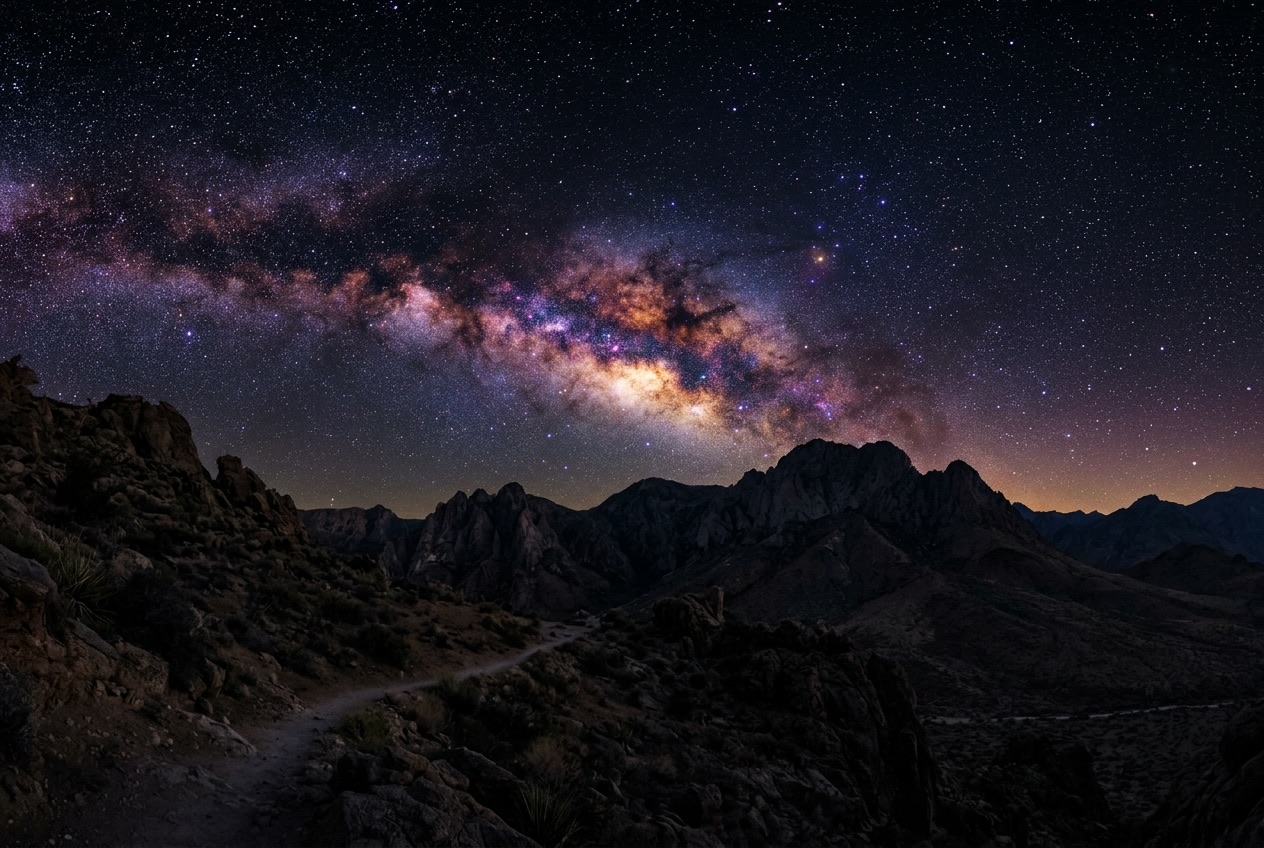
Photographing the galactic core of the Milky Way requires a specific combination of astronomical and meteorological conditions: the sun must be deep below the horizon (astronomical twilight, below -18 degrees), the moon must be absent or very dim (below 10% illumination is excellent, below 30% acceptable), and the sky must be nearly cloudless (below 15% cover).
Inverza also checks that the galactic center is at least 10 degrees above the horizon - below that altitude, atmospheric extinction makes the core too dim to photograph effectively. The scoring weighs galactic altitude, sky darkness, moon interference, and cloud cover.
Light pollution is now baked in (v1.5+)
As of version 1.5, Inverza factors in the local Bortle class of every saved spot. The data comes from a global VIIRS satellite light-pollution raster (NOAA's annual nighttime-lights composite), bundled with the app at roughly 1 km resolution. Lookups happen on-device, no network call, no API key required.
The detector treats Bortle 1-3 (true dark sky) with no penalty: confidence reflects the astronomy alone. Bortle 4 takes a small subtraction; Bortle 5 a larger one; Bortle 6-7 caps the score below the "Likely" tier even on a perfect new-moon clear night, which is honest: the galactic core is technically there, but light pollution will wash out the texture you'd see from a rural site. Bortle 8-9 city interiors are hard-gated - the detection simply won't fire, because driving across town for an invisible Milky Way wastes your night. The reason text and a caveat on the badge tell you what the local Bortle reading was and what to expect.